Dr. Seuss' First Book Was Rejected By 27 Publishers. On His Way Home To Burn It, His Life Changed Forever
January 2, 2016
The first book of Theodor Seuss Geisel, better known to us as Dr. Seuss, was rejected by twenty-seven publishers before it was finally accepted by Vanguard Press.
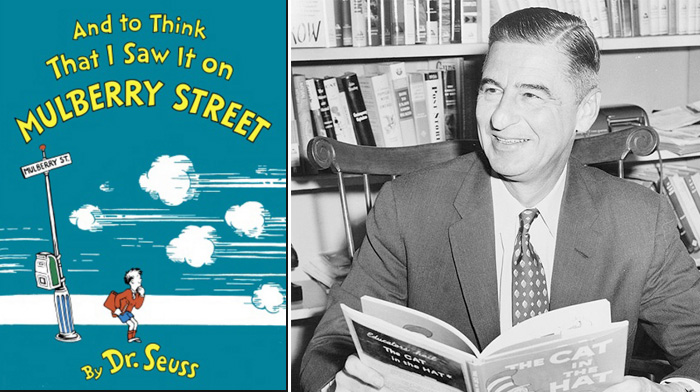
Photo credit: wikipedia commons
In the book, A Curious Mind, TV producer Brian Grazer explains how the stars aligned to make it all possible:
"Being determined in the face of obstacles is vital. Theodor Geisel, Dr. Seuss, is a great example of that himself. Many of his forty-four books remain wild bestsellers. In 2013, Green Eggs and Ham sold more than 700,000 copies in the United States (more than Goodnight Moon); The Cat in the Hat sold more than 500,000 copies, as did Oh, the Places You'll Go! and One Fish Two Fish Red Fish Blue Fish. And five more Dr. Seuss books each sold more than 250,000 copies. That's eight books, with total sales of more than 3.5 million copies, in one year (another eight Seuss titles sold 100,000 copies or more). Theodor Geisel is selling 11,000 Dr. Seuss books every day of the year, in the United States alone, twenty-four years after he died. He has sold 600 million books worldwide since his first book, And to Think That I Saw It on Mulberry Street, was published in 1937. And as inevitable as Dr. Seuss's appeal seems now, Mulberry Street was rejected by twenty-seven publishers before being accepted by Vanguard Press...
"The story of Geisel being rejected twenty-seven times before his first book was published is often repeated, but the details are worth relating. Geisel says he was walking home, stinging from the book's twenty-seventh rejection, with the manuscript and drawings for Mulberry Street under his arm, when an acquaintance from his student days at Dartmouth College bumped into him on the sidewalk on Madison Avenue in New York City. Mike McClintock asked what Geisel was carrying. 'That's a book no one will publish,' said Geisel. 'I'm lugging it home to burn.' McClintock had just that morning been made editor of children's books at Vanguard; he invited Geisel up to his office, and McClintock and his publisher bought Mulberry Street that day. When the book came out, the legendary book reviewer for the New Yorker, Clifton Fadiman, captured it in a single sentence: 'They say it's for children, but better get a copy for yourself and marvel at the good Dr. Seuss's impossible pictures and the moral tale of the little boy who exaggerated not wisely but too well.' Geisel would later say of meeting McClintock on the street, 'If I'd been going down the other side of Madison Avenue, I'd be in the dry-cleaning business today."
 Stray Dog Becomes the Star of a Wrestling Match
 Grateful Man Celebrates His 60th Birthday With Pizza, Receives Thousands Of Birthday Wishes
 Two Cats Sitting Under an Umbrella Have the Internet Asking One Very Important Question
 Dad Tells His Children He Won The Nobel Prize In Medicine
 She Broke Her Nose the Night Before Her Daughter’s Wedding
 Photographer Captures Dogs “Flying” Through the Air, and the Photos Are Pure Joy
 Hero Chick-fil-A Employee Saves Woman and Baby
 Dad Goes Viral for Dancing at Olivia Rodrigo Concert With His Daughters