Polar Bear Mom Adopts Orphaned Cub in Remarkably Rare Act
December 18, 2025
Researchers tracking polar bears in northern Canada recently witnessed something truly special — a wild polar bear mother adopting a cub that was not her own.
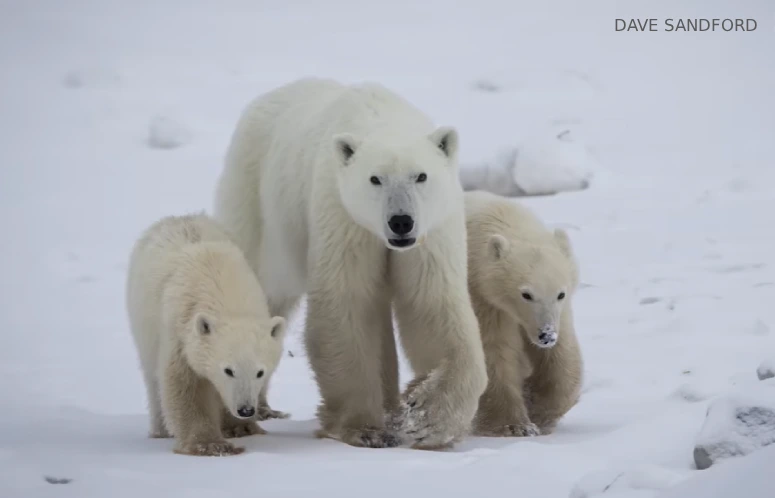
Credit: Dave Sandford
The rare moment was observed near Churchill, Manitoba, during the annual polar bear migration along Western Hudson Bay. Scientists spotted a five-year-old female traveling with two cubs, both around 10 to 11 months old. What made the sighting extraordinary was that only one of the cubs was biologically hers.
The mother was first documented earlier this spring as she emerged from her maternity den with a single cub, which researchers tagged for tracking. When scientists encountered her again in the fall, they were surprised to see that her family had grown. One cub still had its tracking tag — the other did not.
After reviewing the data, researchers confirmed the untagged cub had been adopted. It marks just the 13th documented case of polar bear cub adoption among more than 4,600 bears studied in the western Hudson Bay region over nearly 50 years.
The rare family moment was captured on camera by Polar Bears International photo ambassador Dave Sandford, who photographed and filmed the bears during the encounter. Sandford said he felt “very blessed” to witness the family together, noting that being able to document the bears helped researchers confirm the adoption and learn more about this unusual behavior.
“It gave us the opportunity to photograph them and submit the evidence and story,” Sandford said, adding that it offered “even more reason to root for this beautiful polar bear family.”
“It doesn’t happen often at all,” said Alyssa McCall of Polar Bears International in a video shared with media. “But when we confirmed this was an adoption, it gave us a lot of hope. It’s another reminder of how fascinating and incredible these animals are.”
Polar bear cubs have about a 50 percent chance of surviving into adulthood — but without a mother, their odds drop dramatically. Having a mother to nurse, protect, and teach them crucial survival skills significantly improves their chances.
The cubs appear healthy and are expected to remain with their adoptive mother for another year or more. Eventually, the family will head onto the sea ice, where the cubs will learn how to hunt seals and survive on their own.
 Dogs Are Forced To Wear The Things They Steal — And It’s Hilarious
 A Dad Keeps a Running List of Every Dog He Meets on His Beach Walks
 After Losing His Right Arm, His Cousin Spent 48 Hours Crocheting Him a New One
 Miles Don't Have to Separate Us; You Just Need to Use Technology!
 This Dentist Brings His Dog In To Help People With Dental Anxiety
 Smart Blackjack Strategies Every Player Should Know
 Shelter Dogs Pick Their Favorite Toys, and Their Reactions Are Priceless
 Golden Retriever Gets Trapped By Sleeve, Finally Gets Free
 Trumpet Player SINGS National Anthem After Trumpet Malfunctions
 Strong Man Loses on Purpose So a Dad Can Make His Daughter Proud
 Stray Dog Becomes the Star of a Wrestling Match