Everyday People Are Making Scientific Discoveries With This Free App
March 23, 2026
There are millions of life forms sharing our planet—so many, in fact, that scientists estimate the total could reach 10 million species.
And now, everyday people are playing a surprising role in discovering and protecting them… all from their phones.
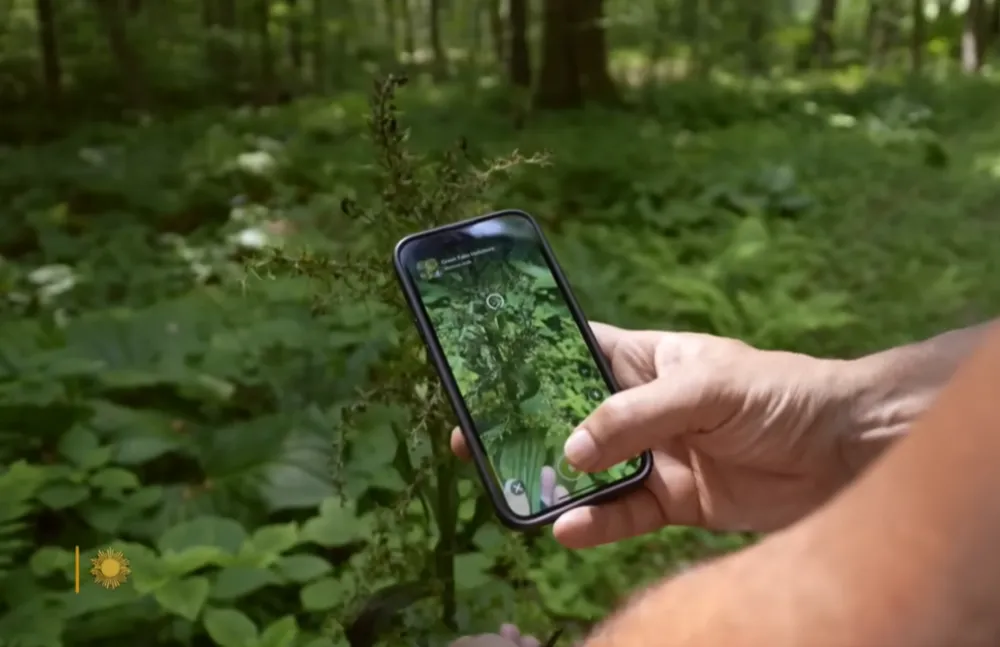 iNaturalist app / CBS News
The app at the center of it all is iNaturalist, a free platform that’s quietly become one of the most powerful tools in modern science. What started as a simple way to identify plants and animals has grown into a global movement.
“Currently we have about six million people using the platform every month,” said executive director Scott Loarie. Altogether, the community has surpassed 9 million users, logging more than 300 million observations across 197 countries—documenting over 557,000 species.
And sometimes, those observations lead to incredible discoveries.
“It happens all the time,” Loarie said. “Almost every month we get a new species described.”
One of his favorite moments? A man in the Andes who found an unexpected visitor in his cabin.
“He grabs his camera,” Loarie recalled. “The first-ever photographs of these species… and they happen to be sitting on a toilet.”
Yes, really. The now-famous moment even sparked a viral hashtag: #ToiletWeasel.
How did a toilet photo become a breakthrough for science? 📸🦦@loarie of @inaturalist shares how a camper in a remote Colombian cabin snapped the first confirmed photos of a living Colombian weasel, a species once known only from 1800s museum skins. Uploaded to iNaturalist, the… pic.twitter.com/AdlMmsAS7j
— Museum of Science (@museumofscience) January 20, 2026
But behind the fun and quirky discoveries is something much more powerful.
Every photo uploaded to iNaturalist includes a time and location stamp—turning casual snapshots into valuable scientific data.
“It’s not just a photo. It has a date, it has a location,” Loarie explained. “It turns out that most data for most species on the planet now is coming from this little app.”
That information is helping scientists track major environmental changes in real time. For example, it’s been used to monitor the spread of invasive species like the lanternfly, which has expanded from Asia into the U.S. East Coast.
For many users, the biggest reward is realizing they’re making a real difference.
“People go like, ‘Wow, I’m actually part of the solution. By me taking this photo, I’m helping science,’” Loarie said.
All from a phone in your pocket.
 Dogs Are Forced To Wear The Things They Steal — And It’s Hilarious
 5 Genuinely Wholesome Things Happening on Video Calls Right Now
 A Dad Keeps a Running List of Every Dog He Meets on His Beach Walks
 Miles Don't Have to Separate Us; You Just Need to Use Technology!
 After Losing His Right Arm, His Cousin Spent 48 Hours Crocheting Him a New One
 Missing Toddler Walks 7 Miles Into Wilderness, Then a Dog He'd Never Met Finds Him
 Golden Retriever Brings Toys to a Man Breaking Into His Home
 Rescue Dog Reaches Out Paw to Pray With Priest During Church Service
 Dad and Daughter Pilots Recognize Each Other on the Radio, and It Gets Hilarious
 Shelter Dogs Pick Their Favorite Toys, and Their Reactions Are Priceless