Innovative Ocean Cleanup System Launches First Vessel Into The Pacific
September 28, 2018
The Great Pacific Garbage Patch is the world's largest collection of floating trash. It lies between Hawaii and California.
The Ocean Cleanup, a cleanup campaign created by Dutch teenager, Boyan Slat, has launched its first vessel to rid more than 50% of the trash in this location, which is often described as "larger than Texas."
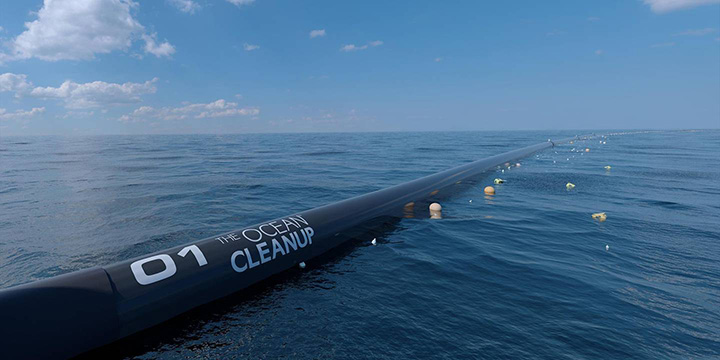
The Ocean Cleanup
Cleaning up the Great Pacific Garbage Patch using conventional methods - vessels and nets - would take thousands of years and billions of dollars to complete.
The Ocean Cleanup's system uses the natural oceanic forces to catch and concentrate the plastic. Both the plastic and system are being carried by the current.
The system consists of a 600-meter-long floater that sits at the surface of the water and a tapered 3-meter-deep skirt attached below. The floater provides buoyancy to the system and prevents plastic from flowing over it, while the skirt stops debris from escaping underneath.
The first cleanup system, System 001, was deployed on September 8, 2018.
"Following the successful launch from the San Francisco Bay, System 001 traveled 350 nautical miles to commence the Pacific Trials," the organization said in a statement. "The trials will last approximately two weeks and are a crucial step before we take System 001 the remaining approximate 800 nautical miles to the Great Pacific Garbage Patch. Consider it a final dress rehearsal before the main performance - cleaning plastic from the ocean."
Here is the checklist System 001 needs to fulfill at the test site before it can head to the Great Pacific Garbage Patch. 1 down, 4 to go. pic.twitter.com/cYVxs9KQJR
— The Ocean Cleanup (@TheOceanCleanup) September 18, 2018
Slat founded The Ocean Cleanup in 2013 and managed to raise $2.2 million through a crowdfunding campaign with the help of 38,000 donors from 160 countries. In 5 years, the organization has raised $31.5 million in donations from entrepreneurs in Europe and in Silicon Valley.
Slat estimates that half of the Great Pacific Garbage Patch will be gone within 5 years, and is hopeful for a plastic-free ocean by 2050.
"Models show that a full-scale cleanup system roll-out (a fleet of approximately 60 systems) could clean 50% of the Great Pacific Garbage Patch in just five years," the organization wrote on its website.
"Research shows the majority of plastic by mass is currently in the larger debris. By removing the plastic while most of it is still large, we prevent it from breaking down into dangerous microplastics.
Combining the cleanup with source reduction on land paves the road towards a plastic free ocean by 2050."
You can track System 001 here and follow The Ocean Cleanup on Facebook and Twitter.
 Stray Dog Becomes the Star of a Wrestling Match
 Grateful Man Celebrates His 60th Birthday With Pizza, Receives Thousands Of Birthday Wishes
 Two Cats Sitting Under an Umbrella Have the Internet Asking One Very Important Question
 Kittens Take A Field Trip To The Aquarium
 Dad Tells His Children He Won The Nobel Prize In Medicine
 She Broke Her Nose the Night Before Her Daughter’s Wedding
 Photographer Captures Dogs “Flying” Through the Air, and the Photos Are Pure Joy
 Dad Goes Viral for Dancing at Olivia Rodrigo Concert With His Daughters