Scientists Claim Time On The Playground Is More Beneficial Than Time In The Classroom
August 6, 2014
A new study shows that when it comes to a child's brain development, time in the classroom may be less important than time on the playground.
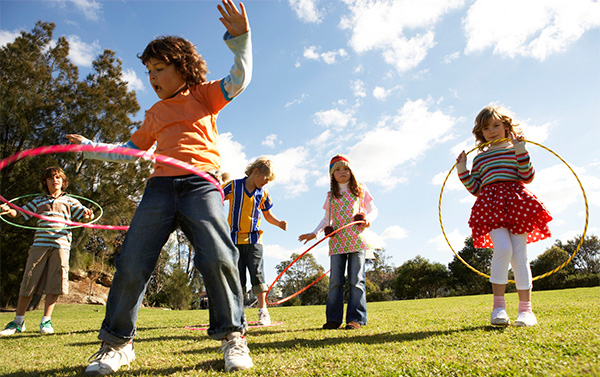
image credit unknown
"The experience of play changes the connections of the neurons at the front end of your brain," says Sergio Pellis, a researcher at the University of Lethbridge in Alberta, Canada. "And without play experience, those neurons aren't changed," he says.
"It is those changes in the prefrontal cortex during childhood that help wire up the brain's executive control center, which has a critical role in regulating emotions, making plans, and solving problems," Pellis says. "So play," he adds, "is what prepares a young brain for life, love and even schoolwork."
"But to produce this sort of brain development, children need to engage in plenty of so-called free play," Pellis says. "No coaches, no umpires, no rulebooks."
"Whether it's rough-and-tumble play or two kids deciding to build a sand castle together, the kids themselves have to negotiate, well, what are we going to do in this game? What are the rules we are going to follow," Pellis says. "The brain builds new circuits in the prefrontal cortex to help it navigate these complex social interactions."
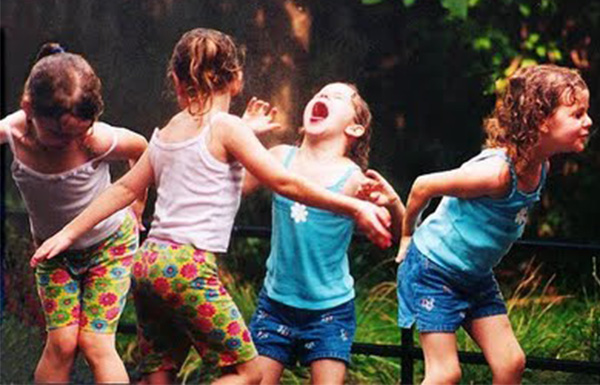
image credit unknown
Much of what scientists know about this process comes from research on animal species that engage in social play.
"For one thing, play behavior is remarkably similar across species. Rats, monkeys, and children all abide by similar rules that require participants to take turns, play fair, and not inflict pain. Play also helps both people and animals become more adept socially," Pellis says.
"And in people, an added bonus is that the skills associated with play ultimately lead to better grades."
In one study, researchers found that the best predictor of academic performance in eighth grade was a child's social skills in third grade.
Another hint that play matters, Pellis says, is that "countries where they actually have more recess tend to have higher academic performance than countries where recess is less."
Via NPR
 Stray Dog Becomes the Star of a Wrestling Match
 This Dentist Brings His Dog In To Help People With Dental Anxiety
 Second Chances In The Saddle: The Retired Racehorses Finding Loving New Homes
 A Guardian in the Light Fixture: Daughter Finds One Last Surprise Her Dad Left Behind
 Smart Blackjack Strategies Every Player Should Know
 Grateful Man Celebrates His 60th Birthday With Pizza, Receives Thousands Of Birthday Wishes
 Bear Strolls Into Farmers Market, Helps Himself to Free Snacks
 A Sign Told These Tourists to “Follow the Cat,” So They Did
 Man Tests If His New Pants Fit With the Spider-Man Method
 Pro Arm Wrestler Loses On Purpose So Dad Can Be Daughter's Hero
 The Best Sports Tradition Ever: The Hawkeye Wave