Albanian Beekeepers Having A 'Golden Year' Due To Coronavirus Lockdown
May 24, 2020
One of the largest bee farms in Albania say this has been a "golden year" for bees thanks to a break from pollution and pesticides.
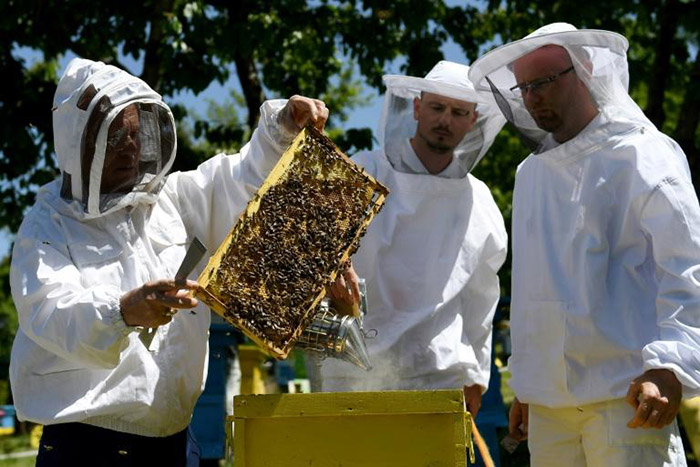
AFP Photo / Gent SHKULLAKU
With factories and farms silenced by the coronavirus shutdown, Albania's bees have been busier than ever.
"It's a golden year for bees," says 68-year-old Gezim Skermo, a beekeeper at the Morava bee farm.
During his 50 years in beekeeping, Skermo says he has "never seen a season like this," hailing it as "rebirth for nature and the bees".
The beekeeper attributes the sudden buzz to the coronavirus measures. The restrictions have brought quiet, cleaner air and less pesticide-spraying from farmers.
"This year we didn't have any losses, unlike in previous years when we found dead bees in front of the hives," said Skermo. "There was no noise, no pollution, nothing that could disturb them".
The Morava farm normally produces between 5 and 15 tonnes of honey a year.
Although Skermo refuses to give specific figures on how much honey will be produced this season, he insists the yield will be abundant and of the highest quality.
"While people have been shut up at home, the bees have not been confined," he said. "They have been working very hard."
 Stray Dog Becomes the Star of a Wrestling Match
 Grateful Man Celebrates His 60th Birthday With Pizza, Receives Thousands Of Birthday Wishes
 Two Cats Sitting Under an Umbrella Have the Internet Asking One Very Important Question
 Dad Tells His Children He Won The Nobel Prize In Medicine
 She Broke Her Nose the Night Before Her Daughter’s Wedding
 Photographer Captures Dogs “Flying” Through the Air, and the Photos Are Pure Joy
 Hero Chick-fil-A Employee Saves Woman and Baby
 Dad Goes Viral for Dancing at Olivia Rodrigo Concert With His Daughters