Rare ‘Blue Dragons’ Are Washing Up On Texas Beaches — But Don’t Touch Them
March 16, 2026
Beachgoers along parts of the Texas coast are getting a rare glimpse of one of the ocean’s most eye-catching creatures—tiny sea slugs nicknamed “blue dragons.”
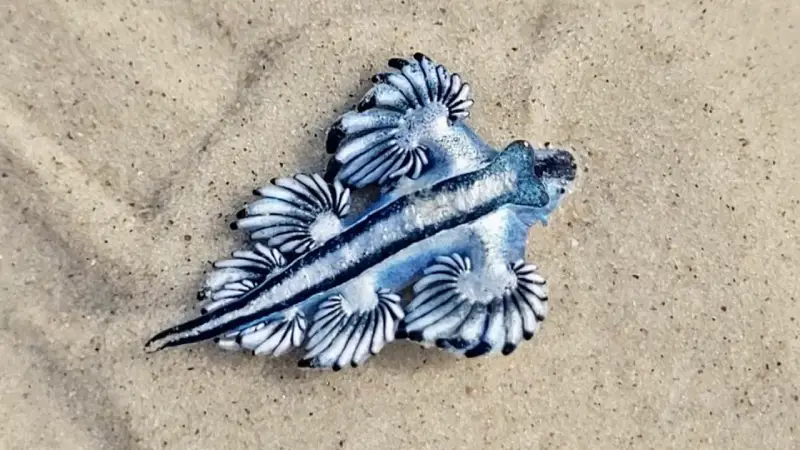 Credit: Courtesy Harte Research Institute
Researchers from the Harte Research Institute recently discovered about 20 of the unusual animals along a short stretch of beach. While they may look like something out of a fantasy movie, experts say they’re best admired from a safe distance.
“They’re absolutely stunning — but do NOT touch them,” researchers warned in a social media post.
The creatures, scientifically known as Glaucus atlanticus, are small sea slugs that usually float in the open ocean and are rarely seen on shore in the United States. Under the right conditions, however, strong winds can push floating marine life toward land.
That appears to be what happened recently.
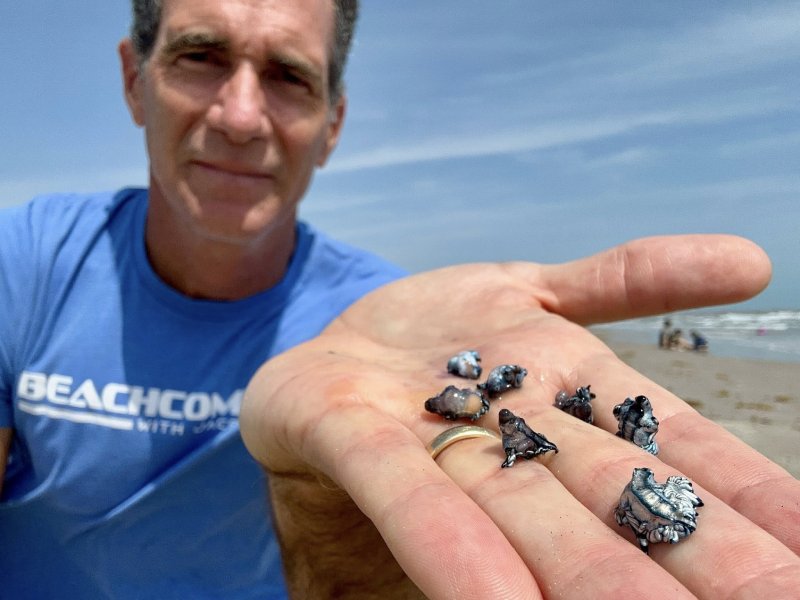 Credit: Courtesy Harte Research Institute
According to Jace Tunnell of the University of Texas Marine Science Institute, weather patterns and steady onshore winds likely carried the tiny creatures to the beach.
“If conditions are right, they can be blown up on shore,” Tunnell explained. “It’s just the perfect conditions and timing to be able to have this stuff coming up on the beaches.”
Blue dragons may be beautiful, but they come with a surprising defense.
These tiny drifters feed on the stinging tentacles of the Portuguese man o’ war, storing the jellyfish’s stinging cells inside their own bodies. Scientists say the sea slugs actually concentrate those cells, which means their sting can sometimes be even more painful than the creature they feed on.
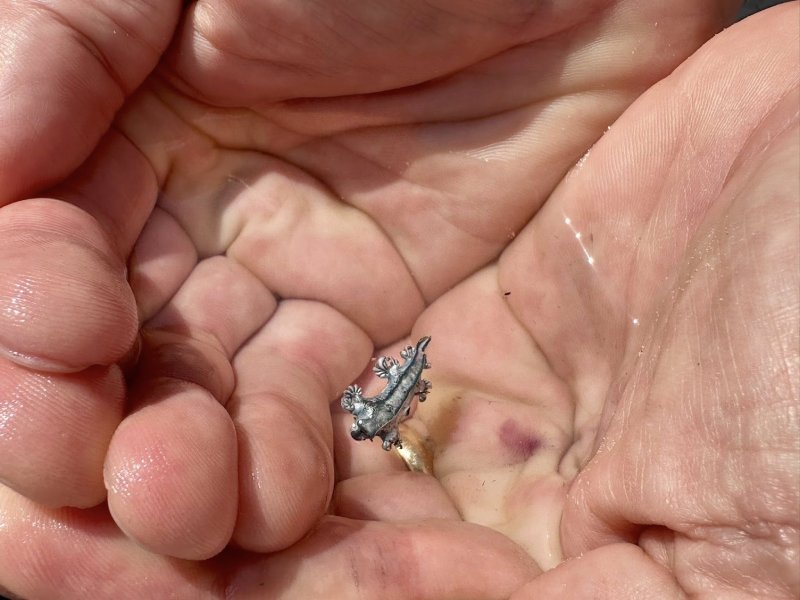 Credit: Courtesy Harte Research Institute
“If you get stung by one of these, we say take it easy,” Tunnell said, noting the pain can feel very similar to a man-o’-war sting. “If you have an allergic reaction, or if the pain is too much to bear, we recommend going to the hospital.”
The bright blue slugs are extremely small—usually only about 1 to 3 centimeters long—so they can easily be missed among shells, seaweed, and other debris along the shoreline.
Researchers say the safest approach is simple: enjoy the rare sight, snap a photo, and leave the creature where it is.
“The ocean is amazing,” the institute said. “But sometimes the most beautiful creatures come with a sting.”
 Dogs Are Forced To Wear The Things They Steal — And It’s Hilarious
 Woman Creates Hilariously Detailed Information Sheets For Friends Watching Her Cats
 “He Cried”: Fan Had a Spare Ticket to the Game, So He Gave It to a Homeless Man
 His Girlfriend Brought Home a Cat He Didn’t Want. Now, They’re Best Friends
 5 Genuinely Wholesome Things Happening on Video Calls Right Now
 She Threw Her Cat a Quinceañera, and It Saved an Animal Shelter
 Family's Birthday Tradition Brings 5-Year-Old Boy To Tears
 Supermarket Manager Saves Little Girl From Oncoming Traffic Just In Time
 Missing Toddler Walks 7 Miles Into Wilderness, Then a Dog He'd Never Met Finds Him
 Rescue Dog Reaches Out Paw to Pray With Priest During Church Service