A Massive Ancient Greek City Has Been Discovered Underwater In The Aegean Sea
September 2, 2015
An ancient Greek city has been discovered sunken beneath the Aegean Sea. The settlement dates back around 4,500 years (2,500 BC) and was the size of around 10 football fields, covering an area of 12 acres.
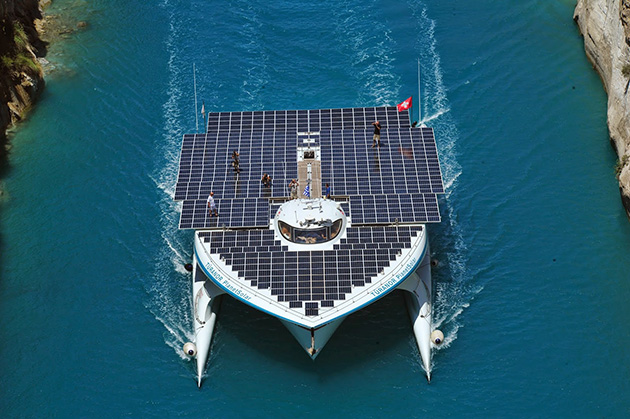
The solar-powered 'Terra Submersa' ship that served as a tender for the expedition.
Archaeologists from the Ephorate of Underwater Antiquities, University of Geneva and the Swiss School of Archaeology found the fortified Bronze Age settlement in Khilada Bay, in the Argolic Gulf. They found at least three huge horseshoe-shaped foundations attached to the wall line – which they say was possibly part of towers used to defend the settlement.
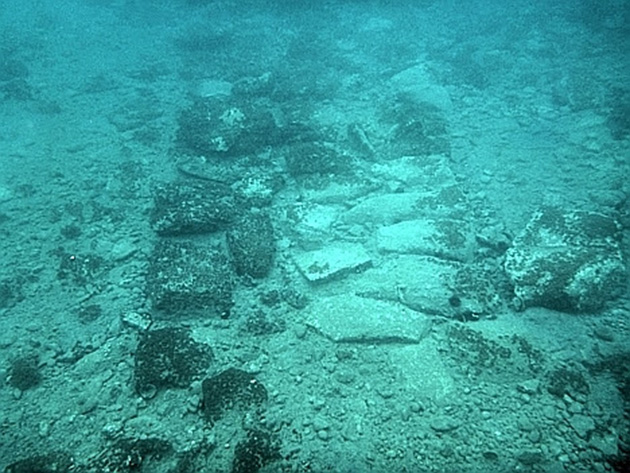
A Bronze Age pavement or fortification wall / Credit: Spero News
Defensive structures of this kind have never been found before from this time period in Greece, the University of Geneva's Julien Beck said. He told Spero Forum: "The importance of our discovery is partly due to the large size. There must have been a brick superstructure above a stone foundation. The chances of finding such walls under water are extremely low. The full size of the facility is not yet known. We do not know why it is surrounded by fortifications."
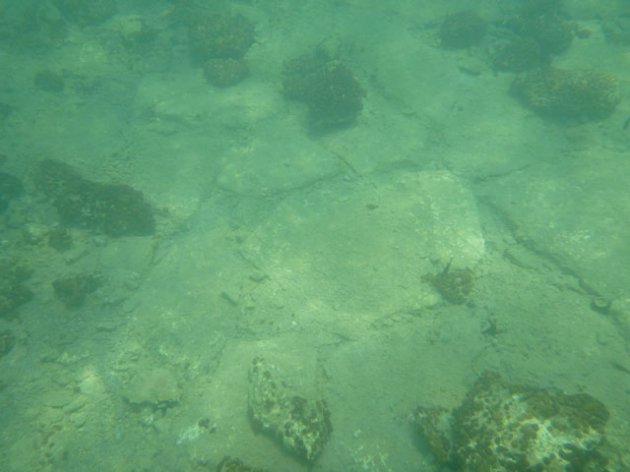
Ephorate of Underwater Antiquities/University of Geneva/Swiss School of Archaeology
The find was announced by the Hellenic Ministry of Culture, Education and Religious Affairs. The team had been looking for traces of prehistoric human activity on the eastern side of the Argolic Gulf. The city was submerged between one and three meters beneath the surface and consisted of a multitude of stone buildings of differing shapes, including rectangular, circular and arcs. They found paved surfaces, which they believe to be streets.
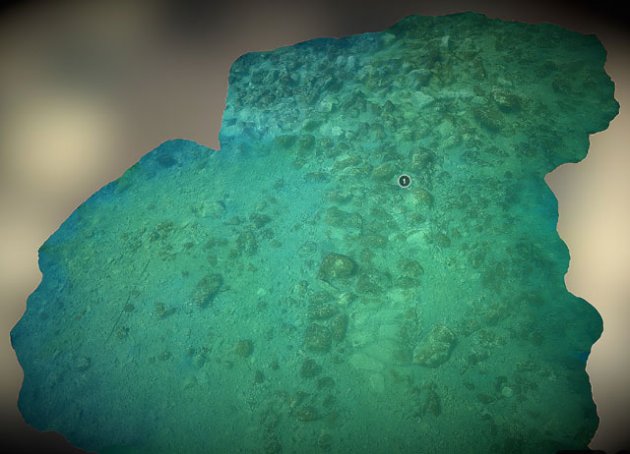
Ephorate of Underwater Antiquities/University of Geneva/Swiss School of Archaeology
Researchers also pulled up pottery, stone tools and blades from the site that was typical from the period of the third millennium BC.
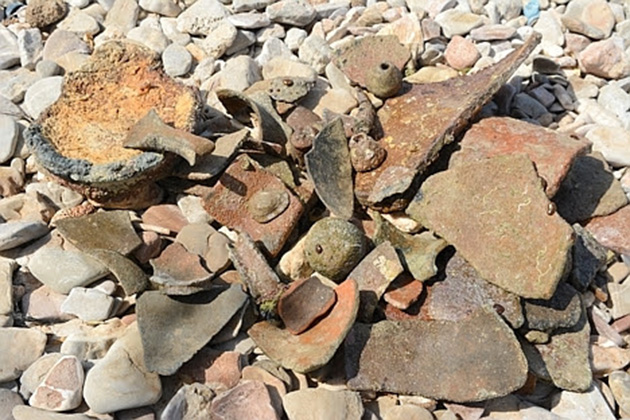
Credit: Spero News
The find adds to the network of Bronze Age coastal settlements in the Argolic Gulf from the period and researchers hope they will learn more about trade, shipping and day to day life from the period.
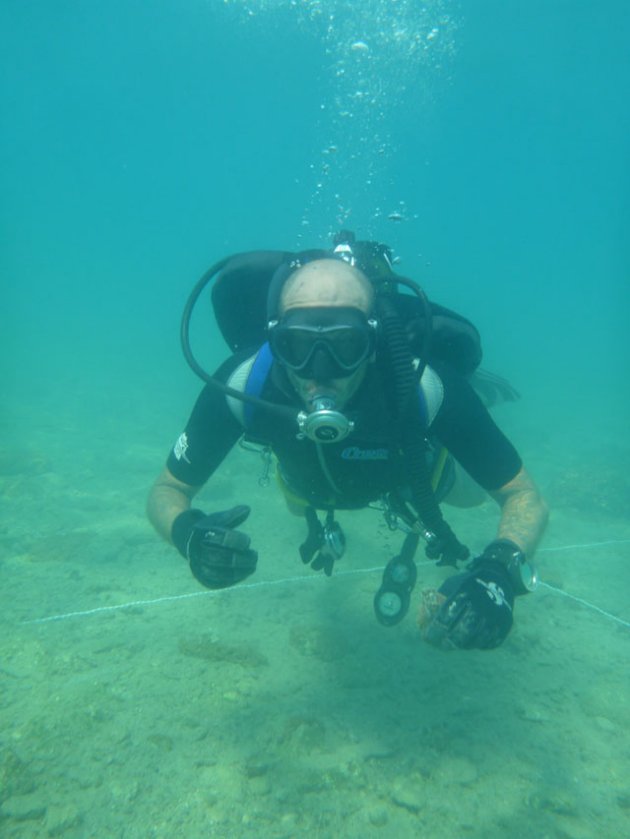
Ephorate of Underwater Antiquities/University of Geneva/Swiss School of Archaeology
The city is thought to be typical layout of the time, with small buildings surrounded by fortified walls. Beck said another one was found in the nearby town of Lerna, which is mentioned in Greek mythology when Hercules had to battle the Hydra. The aquatic beast had its lair in the lake of Lerna and was supposed to be an entrance to the underworld, with Hydra serving as a guard.
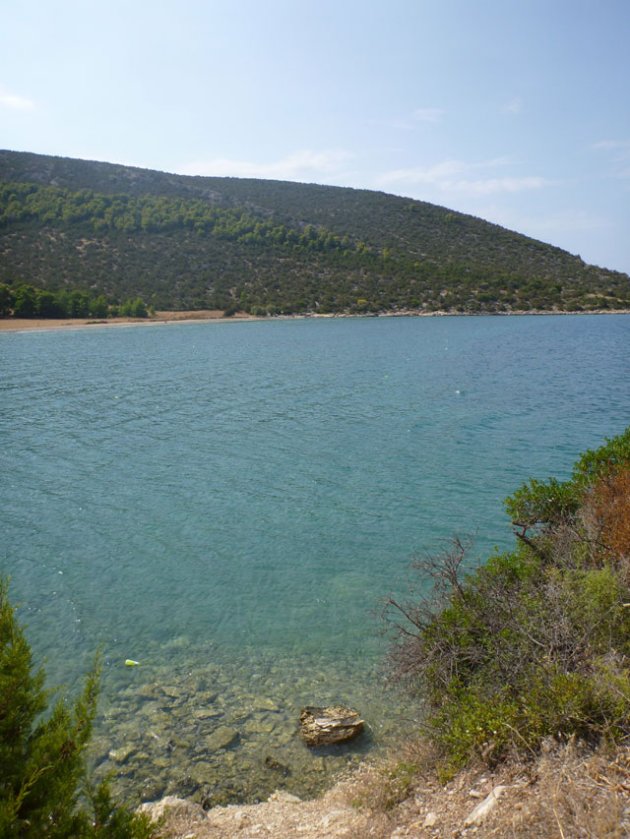
Ephorate of Underwater Antiquities/University of Geneva/Swiss School of Archaeology
Beck said if they compare the latest discovery will likely lead to a re-think of Lerna's prominence: "That city is considered a reference point in architectural terms and ceramics which have been found there. Now, if we compare our discovery to that important city [its status will need to be re-examined]."
Credit: IBT, Spero News.
 Stray Dog Becomes the Star of a Wrestling Match
 Grateful Man Celebrates His 60th Birthday With Pizza, Receives Thousands Of Birthday Wishes
 Two Cats Sitting Under an Umbrella Have the Internet Asking One Very Important Question
 The Best Sports Tradition Ever: The Hawkeye Wave
 These Middle Schoolers Made a 5-Year-Old’s Birthday Unforgettable
 Kittens Take A Field Trip To The Aquarium
 Dad Tells His Children He Won The Nobel Prize In Medicine
 She Broke Her Nose the Night Before Her Daughter’s Wedding